


Hispanic Military Service
National Hispanic Heritage Month, beginning September 15 and ending October 15 to coincide with the independence anniversaries of several Latin American countries, started in 1968 when President Lyndon Johnson established a week-long celebration to honor the influence of Hispanic and Latino Americans. In 1988, President Ronald Reagan expanded it to a full month to offer a deeper recognition of the many ways this community has shaped our nation. National Hispanic Heritage Month is a time to reflect on history and to look forward, celebrating all the ways Hispanic and Latino Americans have contributed to our national story.
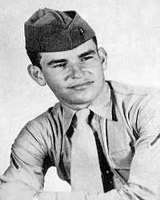
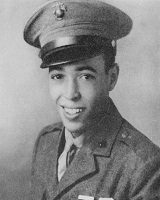
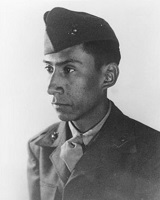
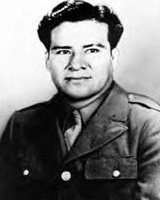
NCA highlights the long tradition of military service by the Hispanic community. Hispanics have contributed to military successes from the earliest days following settlement of the Southwest Territories to today. Formed in 1865 and composed largely of Mexican Americans, the 158th Infantry Regiment Bushmasters contributed to success during Mexican Border conflicts, and later in the Pacific Theater of World War II and the Philippines campaign. The 65th Infantry Regiment Borinqueneers, formed in 1899 and primarily volunteer Puerto Rican soldiers, participated in critical battles of the Korean War. They later received a Congressional Gold Medal for their service. Many Hispanic notable Veterans are interred at VA national cemeteries, including 22 Medal of Honor recipients.
158th Infantry Bushmasters
 Photo of the Charlie Company 158th Infantry Regiment "Bushmasters," January 14, 1945. (Arizona National Guard Public Affairs)
The 158th Infantry Regiment was formed in 1865, comprised largely of Native Americans and Mexican Americans. The unit participated in battle on the Mexican border during its early days. The 158th was sent to France during World War I, but did not see combat there. Afterwards, it aligned with other surrounding National Guard units to form the 45th Infantry Division. In preparation for World War II, the 158th participated in the Louisiana Maneuvers trainings of 1941, where they excelled.
After the Pearl Harbor attack, the 158th left for Panama, defending the Panama Canal in the dangerous jungle. Their nickname, Bushmasters, comes from the venomous bushmaster snake found in the jungles of Panama. The Bushmasters were soon sent to the Pacific Theater, fighting in Australia and at the Battle of Lone Tree Hill in New Guinea.
 158th Regiment in the jungle conducting drills.
(Arizona National Guard Public Affairs)
 158th Regiment in a river conducting drills.
(Arizona National Guard Public Affairs)
Their next operation was the Philippines campaign of 1944–1945. On January 11, 1945, known as "Bloody Sunday," the Bushmasters suffered 20 casualties and 65 wounded in an enemy trap while invading Luzon. This was the highest number of casualties the Bushmasters had sustained during a single conflict.
Still, the Bushmasters persevered with the help of fellow units, successfully securing the Visayan passages which were crucial to the Japanese and eventually capturing the Bicol Peninsula. One member of the 158th, Guadalupe Lopez, was awarded the Silver Star for rescuing wounded servicemembers from the field of battle. The unit remained there until the Japanese surrendered and the war ended in 1945.
"No greater fighting combat team has ever deployed for battle."
Gen. Douglas MacArthur
For their commendable actions during the Philippine campaign, the 158th received a Philippine Presidential Unit citation. Company G of the 158th was awarded a Presidential Unit Citation. The unit was deactivated in 1946 and returned to state service after the war.
 Guadalupe Lopez, member of the Bushmasters and recipient of the Silver Star. (Arizona National Guard Public Affairs)
65th Infantry Borinqueneers
After the Spanish-American War and the United States' acquisition of Puerto Rico from Spain, a Volunteer Army unit was formed in 1899, called the Puerto Rico Regiment of Volunteer Infantry. The unit was nicknamed the Borinqueneers, derived from "Borikén," the indigenous Taíno name for Puerto Rico. The regiment was composed primarily of Puerto Rican soldiers who distinguished themselves through their exemplary service in World War I, World War II, and, most notably, the Korean War.
During the Korean War, the 65th Infantry Regiment participated in critical battles, including the Battle of Inchon and the Battle of Chosin Reservoir.
Despite facing harsh conditions and overwhelming odds, the Borinqueneers displayed unwavering courage and determination, earning numerous commendations for their bravery.
 65th Infantry Regiment Borinqueneers.
However, their path was not met without obstacle. They often faced discrimination and prejudice, both within the military and in broader society. Language barriers, cultural differences and systemic racism presented significant challenges. Despite these adversities, the Borinqueneers remained steadfast, determined to prove their capabilities and dedication to the United States.
A campaign to honor the Borinqueneers' heroism, resilience and their unique role in shaping military history with the Congressional Gold Medal arose. It was driven by Veterans, community leaders and advocates who recognized the importance of their legacy. The movement gained momentum over the years, culminating in President Barack Obama signing the bill into law on June 10, 2014. The formal ceremony took place on April 13, 2016, in the U.S. Capitol, where surviving members of the regiment, their families and supporters gathered to celebrate this historic moment.
 Obverse of the Borinqueneers
Congressional Gold Medal.
 Reverse of the Borinqueneers
Congressional Gold Medal.
Medal of Honor
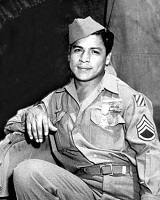
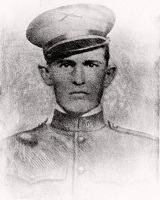
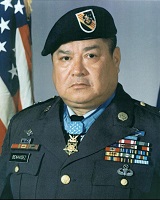
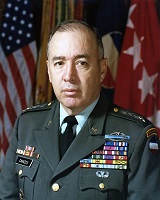
In 2014, a Medal of Honor presentation was held at the White House and officiated by President Barack Obama. It was the result of a congressional mandate calling for the review of Medal of Honor designations. The review ensured no soldier would be passed over because of prejudice, and past contributions would be recognized. Two dozen soldiers were acknowledged that day, including 17 Hispanic servicemembers, four of whom are buried at VA national cemeteries. Currently, 60 Hispanic servicemembers have received the Medal of Honor since its creation during the Civil War.
Hispanic Veterans at VA National Cemeteries
Hispanic notable Veterans at VA national cemeteries are listed below. NCA invites you to remember these Veterans and visit their memorial pages to celebrate the legacy, military service and sacrifice to our nation of these heroes. You can post tributes, upload images, and share biographical information, historical documents and more.