






Lebanon National Cemetery

Cemetery Map
Lebanon National Cemetery
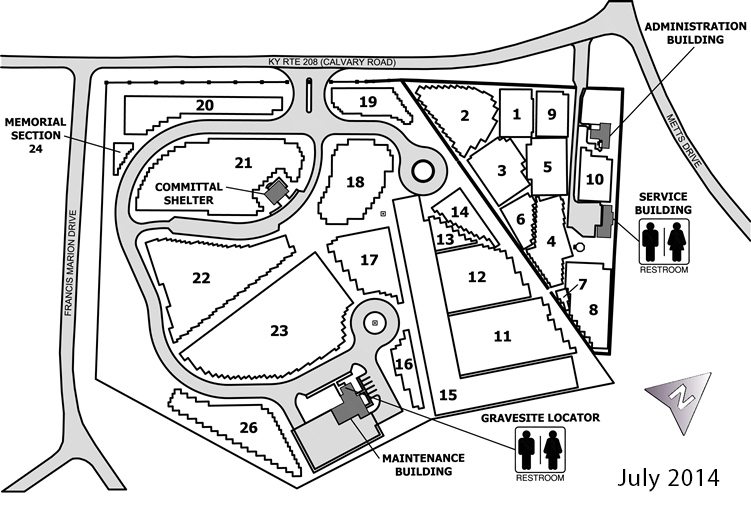
Cemetery Kiosk: Available
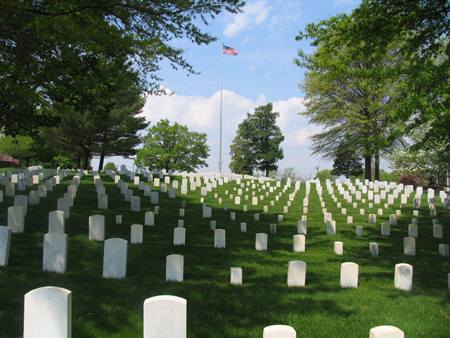
Burial area and flag pole at Lebanon National Cemetery.
Visitation Hours: Open daily from sunrise to sunset.
Office Hours: Monday thru Friday 8:00 a.m. to 4:30 p.m. Closed federal holidays except Memorial Day and Veterans Day.
VA will continue its practice of honoring special requests for weekend burials for religious purposes, in cases of service members killed in action and on at least one day of any three-day Federal holiday weekend at all open VA national cemeteries.
Lebanon National Cemetery is not responsible for any items left at gravesites.
Floral arrangements (up to six arrangements) accompanying the casket or urn at the time of burial will be placed on the completed gravesite by cemetery staff. They will be removed when they become unsightly or when it becomes necessary to facilitate cemetery operations, such as mowing.
Natural cut flowers may be placed on graves at any time of the year. They will be removed and disposed of when they become unsightly.
Temporary metal containers, provided by the cemetery, are available at various sites on the cemetery grounds. Please limit one per gravesite. Cemetery provided floral containers are the only floral containers allowed in the cemetery Perma-vases are not permitted, nor are they sold at Lebanon National Cemetery.
Artificial flowers and/or potted plants, in unbreakable containers (cardboard, plastic, metal), are permitted on gravesites from October 10 until April 15. They will also be permitted on graves 10 days before and 10 days after Easter Sunday and Memorial Day.
Items are subject to removal on the first and third Fridays during mowing season, and depending on the added frequency of mowing more often, up to twice a week. Depending on the growing season, artificial flowers/ potted plants may have to be removed to accommodate the early mowing season, up to twice per week.
Christmas wreaths, grave blankets, and related arrangements will be permitted on graves from December 1 until January 20. Grave floral blankets may not be larger than 2 x 3 feet, please do not wrap them in plastic, as it destroys the turf.
Floral items and other decorations may be secured in place (in the ground) by the donor. They may not be attached to headstones or markers. Floral "stands" and "saddles" are prohibited.
Pets are prohibited in the cemetery.
National Cemeteries are not recreational parks, they are national shrines. Jogging, running or other recreational activities is not allowed.
Unauthorized decorations such as permanent plantings, statues, vigil lights, upright metal flag holders, and breakable objects of any kind and similar commemorative items are not permitted on the gravesites or on the monuments.
Understanding that families may desire to keep certain floral arrangements, we have in place a procedure that, upon the families written request, cemetery personnel will place the arrangement in a designated location for 30 days, after which arrangements will be disposed of.
The staff at Lebanon National Cemetery want to thank you for your cooperation in helping us to maintain this cemetery as a national shrine, a final resting place of Honor and Dignity, for the veterans of this great nation.
Weapons Policy
VA regulations 38 CFR 1.218 prohibit the carrying of firearms (either openly or concealed), explosives or other dangerous or deadly weapons while on VA property, except for official purposes, such as military funeral honors.
Possession of firearms on any property under the charge and control of VA is prohibited. Offenders may be subject to a fine, removal from the premises, or arrest.
This cemetery has space available to accommodate casketed and cremated remains.
Planning ahead for a Veteran's or loved-one's final resting place can eliminate unnecessary delays and reduce stress on a family at a difficult time.
Request eligibility status for:
- Veteran or servicemember
- Spouse
- Dependent family member
Burial in a VA national cemetery is open to all members of the armed forces who have met a minimum active duty service requirement and were discharged under conditions other than dishonorable.
A Veteran's spouse, widow or widower, minor dependent children, and under certain conditions, unmarried adult children with disabilities may also be eligible for burial. Eligible spouses and children may be buried even if they predecease the Veteran.
Members of the reserve components of the armed forces who die while on active duty or who die while on training duty, or were eligible for retired pay, may also be eligible for burial.
Fax all discharge documentation to the National Cemetery Scheduling Office at 1-866-900-6417 and follow-up with a phone call to 1-800-535-1117.
For information on scheduled burials in our national cemeteries, check the Daily Burial Schedule.
This cemetery is supervised by the Kentucky National Cemetery Complex. Please call 270-692-3390 for further information. In the event of an emergency and you are unable to reach Lebanon National Cemetery office, please call Camp Nelson National Cemetery at 859-885-5727, and someone will assist you.
Directions from Nearest Airport
Cemetery is located on the Southern edge of Lebanon, Kentucky.
From Louisville International Airport take Interstate 65 North to Highway 245 South. Follow Highway 245 South to Highway 150 East. Follow Highway 150 East to Highway 55 South. Follow Highway 55 South to Highway 208 South. Follow Highway 208 South to the cemetery.
From the North: Take Interstate 65 South to Highway 245 South. Follow Highway 245 South to Highway 150 East. Follow Highway 150 East to Highway 55 South. Follow Highway 55 South to Maple Street. Turn right at Maple Street and continue to Highway 68, which is Main Street. Turn right at Main Street and continue to Highway 208. Turn left at Highway 208 and cemetery is directly ahead 1/2 mile. From the South: Take Interstate 65 North to Highway 245 South and repeat the directions noted above.
From the East: Take Interstate 64 West to Highway 68 South. Take Highway 68 to Highway 208 and turn left at Highway 208. Cemetery is located 1/2 mile ahead.
From the West: Take the Bluegrass Parkway heading northeast and exit at Highway 150 going east. Take Highway 150 East to Highway 55 South. Follow Highway 55 South to Maple Street. Turn right at Maple Street and continue to Highway 68 (Main Street). Turn right at Main Street and continue to Highway 208. Turn left at Highway 208 and cemetery is 1/2 mile ahead.
Veterans Legacy Memorial
VA's Veterans Legacy Memorial (VLM) is the nation's largest digital platform dedicated to the memory of more than 10 million Veterans and servicemembers, and makes it easy to share, remember, and connect. Family, friends, and the public can search for Veterans, leave tributes, and preserve memories for future generations.
MSGT Jessica Marie Browning (Afghanistan, Iraq). MSGT Browning served 8 years of active duty before transitioning to the Marine Reserves for a total of 26 years of service. While serving in these deployments, MSGT Browning was in hostile combat zone, which earned her the Joint Service Commendation Medal, Navy and Marine Corps Commendation Medal and Navy and Marine Corps Achievement Medal. After battling cancer for over a year, MSGT Browning lost the fight to cancer on September 10th, 2025. She is interred in Section 20 Site 437.
SP4 William Joseph Daugherty (Vietnam). A short time after returning home from Vietnam, SP4 William Daugherty found employment at Lebanon National Cemetery. He started as a Caretaker and worked his way up to Engineering Equipment Operator. He stayed at Lebanon for 45+ years before retiring. He passed away on November 25th, 2021, and is interred in Section 20 Site 407.
CPL William Gerald Kaiser (World War II). Upon CPL William Kaiser's completion of his duties in the U.S. Army, he decided to serve Veterans within the VA. During his tenure, William became the Superintendent of Lebanon National Cemetery where he remained until he retired. William passed away on January 23rd, 2015 and is interred in Section 2 Site 46-K.
Lebanon National Cemetery is located on the outskirts of the community of Lebanon in Marion County, KY. In September 1861, Colonel John M. Harlan from Springfield, IL, established Camp Crittenden at Lebanon and began recruiting the 10th Kentucky Infantry regiment. From November of that year, Lebanon had become the primary staging center for General George H. Thomas' Mill Spring camp. The town remained an important Union supply depot during the Civil War, as well as a major center for Union hospitals. Even after the fighting moved south during the last two years of the war, at least one military hospital continued to operate in town. During the same period, Lebanon was a major recruiting camp for "colored troops." Over 2,053 men were recruited, the overwhelming majority of whom had been slaves in the region.
Official records indicate the U.S. government first obtained the land for the cemetery in 1862, but it was not designated a national cemetery until 1867. The original interments were the scattered remains of Union soldiers from Lebanon and the surrounding countryside. There were 865 total original interments including 281 unknowns. The original triangular tract is bounded by a stonewall and it contains an 1870s lodge occupied by the superintendent and the remains of a rostrum.
In 1984, a donation of 3.4 acres brought the cemetery to 5.8 acres. An additional donation of 9 acres brought the cemetery to its current size. The cemetery was placed on the National Register of Historic Places in 1975.
More than half of VA's national cemeteries originated with the Civil War and many are closed to some burials. Other sites were established to serve World War veterans and they continue to expand. Historic themes related with NCA's cemeteries and soldiers' lots vary, but visitors should understand "Why is it here?" NCA began by installing interpretive signs, or waysides, at more than 100 properties to observe the Civil War Sesquicentennial (2011–2015). Please follow the links below to see the interpretive signs for Lebanon National Cemetery.
Visit the Veterans Legacy Program and NCA History Program for additional information. Thank you for your interest.


